Your technicians are running on a spreadsheet, a phone call, and a hope that someone remembers which unit still has an active warranty. Equipment history lives in one place, the schedule in another, and neither talks to the CRM.
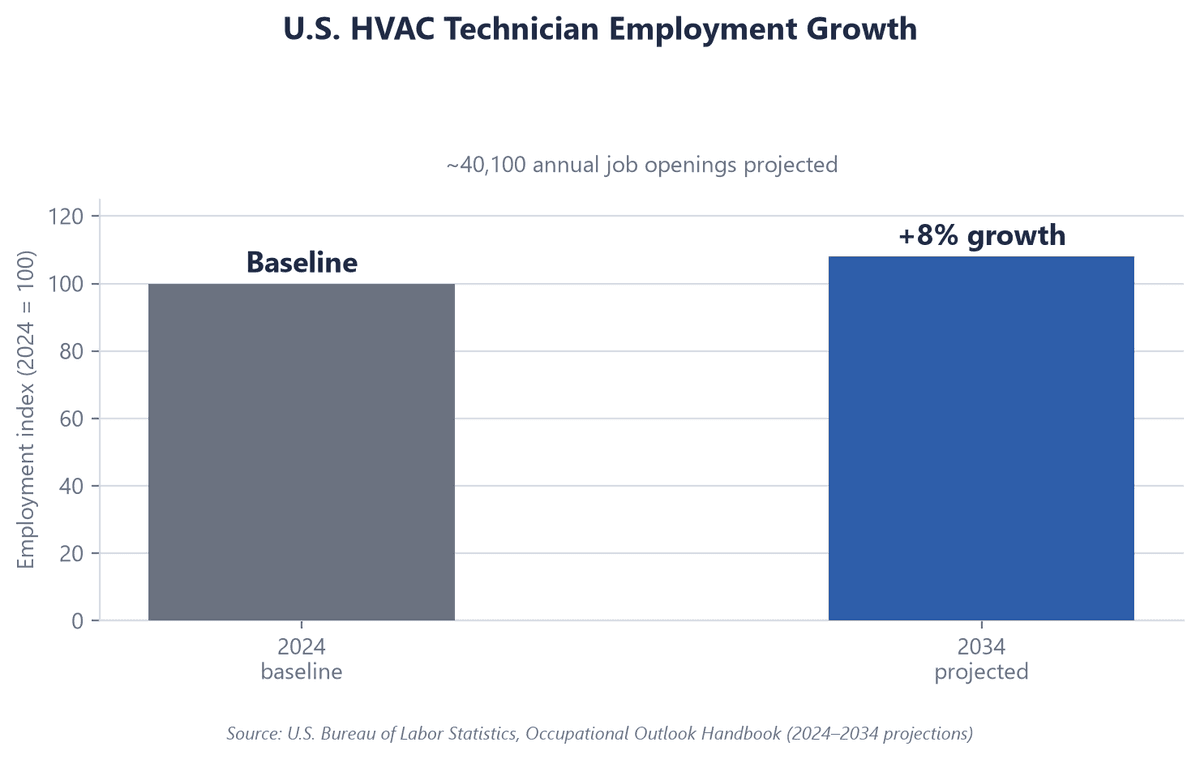
The U.S. Bureau of Labor Statistics projects that employment of heating, air conditioning, and refrigeration mechanics and installers will grow 8 percent from 2024 to 2034, much faster than the average for all occupations, with about 40,100 openings projected each year.
This piece covers what HVAC field management actually involves, how it differs from general FSM, core features to look for, and where DGlide's field service management fits.
TL;DR
HVAC field management applies field service processes specifically to HVAC's mix of scheduled maintenance, emergency repairs, and equipment tracking.
HVAC technician demand is projected to grow 8 percent through 2034, with about 40,100 annual openings, according to the BLS.
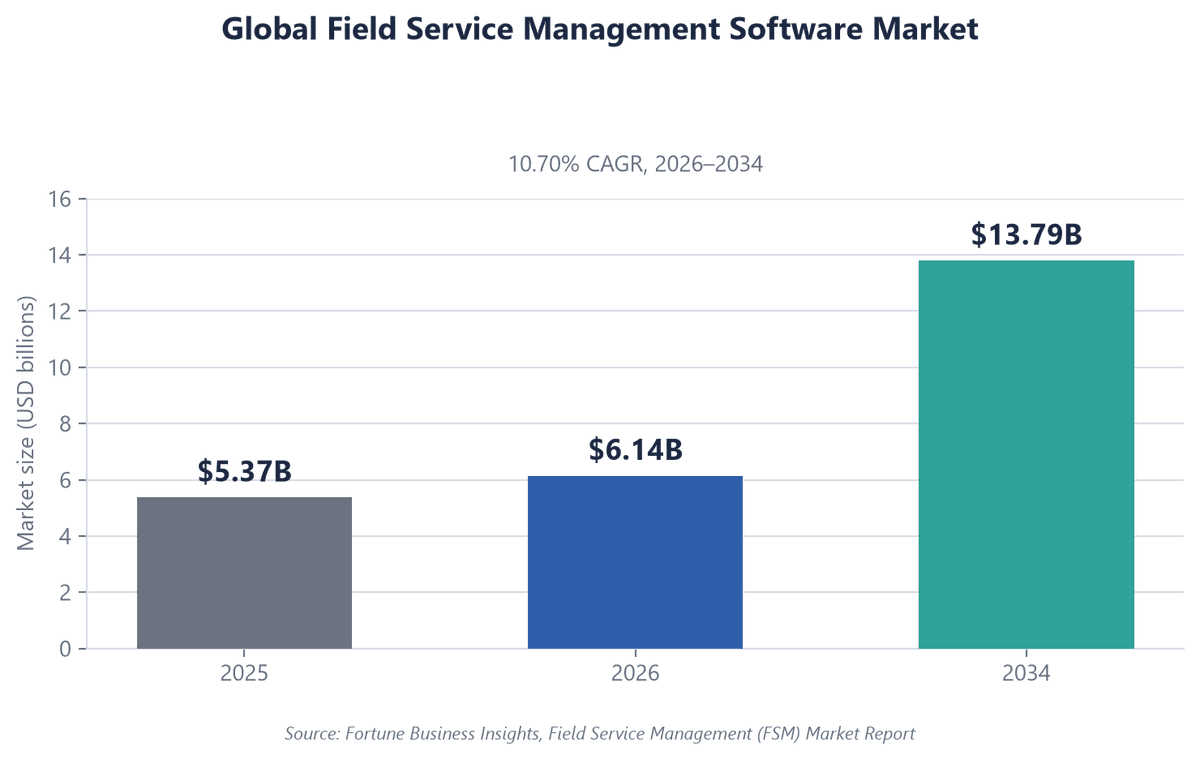
The global FSM software market is projected to grow from $6.14 billion in 2026 to $13.79 billion by 2034.
HVAC field management differs from general FSM mainly in equipment history depth, maintenance contract tracking, and seasonal scheduling demands.
DGlide connects field service, CRM, and ITSM data on one no-code platform, rather than treating HVAC as a bolt-on to a generic scheduling tool.
What Is HVAC Field Management?
HVAC field management covers everything between a customer request and a closed, invoiced job, scheduling the right technician, dispatching them with the right information, tracking the equipment they service, and managing any maintenance contract tied to it.
It sits inside the broader category of field service management, but shaped specifically around HVAC's job mix rather than a generic dispatch workflow.
Three job types make it distinct. Scheduled maintenance runs on a calendar, usually tied to a service agreement that renews on its own cycle. Emergency repairs run on urgency, a no-cooling call in July cannot wait for the next open slot the way a routine filter change can. Installations require accurate equipment specs and multi-visit coordination, since a single unit swap can span sales, permitting, and two or three site visits before it is billable.
How Is HVAC Field Management Different From General FSM?
Most content treats HVAC field management as a rebrand of general FSM, the same scheduling and dispatch features with an HVAC logo on the landing page.
The problem: generic field service software tracks a job, not always the equipment across multiple jobs, which unit, which refrigerant type, which warranty status.
The solution: equipment-level history attached to the same customer record the rest of the business uses, so a technician sees the unit's full history on-site, not just today's ticket.
Equipment history depth. A refrigerant leak repaired eighteen months ago should be visible today, not buried in a closed ticket.
Maintenance contract tracking. Annual agreements need automatic renewal reminders, not a manual calendar entry.
Seasonal demand handling. Scheduling needs to flex for the emergency-call spike every HVAC business hits in peak weeks.
Still tracking equipment history in a separate spreadsheet from your scheduling tool? Talk to us for 15 minutes about connecting the two.
What Are the Benefits of HVAC Field Management Software?
Better technician-to-job matching. Scheduling by skill set, certification, and location means a refrigerant-certified technician gets sent to the refrigerant job, not whoever is next in the queue.
Fewer repeat visits. On-site access to a unit's full service and warranty history cuts the guesswork that turns a one-visit repair into two.
Maintenance revenue that does not get missed. Contract tracking flags renewals and scheduled visits automatically, instead of relying on someone to remember.
Faster cash flow. A job that converts to an invoice on-site gets paid faster than one waiting on office paperwork to catch up.
Lower admin overhead. Fewer phone calls and less manual data entry means less office time spent reconciling what happened in the field.
Core Features to Look For
Skill- and certification-based scheduling: Jobs route to technicians qualified for that specific equipment or refrigerant type, not just whoever is geographically closest, configured on a no-code platform rather than hardcoded logic.
Equipment and asset tracking: Serial numbers, install dates, warranty status, and full service history attached to the unit, visible on-site.
Maintenance contract management: Automatic tracking of recurring agreements, with renewal and scheduled-visit alerts built in.
Mobile access for technicians: Job details, customer history, and digital forms available on-site, not behind a call to the office.
Real-time dispatch: New jobs and schedule changes reach the technician's phone directly, useful for absorbing an emergency-call spike without disrupting the day's existing route.
On-site invoicing: A completed job converts to an invoice immediately, rather than sitting in a paperwork queue until end of day.
How to Choose the Right Software?
Does it track equipment history at the unit level, or only at the job level? This is the gap that separates HVAC-aware platforms from generic FSM tools wearing an HVAC label.
Can scheduling logic absorb a seasonal demand spike without a manual schedule rebuild every time call volume shifts?
Does the mobile app remove the office call, or does it just digitize the same paper checklist without closing the loop?
Does it integrate with the CRM and accounting systems the business already runs, or does it become a fourth disconnected system to reconcile?
What does implementation actually require, weeks of configuration and a dedicated specialist, or a rollout the operations team can manage directly?
Still juggling a scheduling tool, an equipment spreadsheet, and a CRM that does not talk to either? Ask us for a 15-minute walkthrough.
Why Should You Choose DGlide?
If your HVAC operation runs scheduling, equipment tracking, and customer records as three separate systems, DGlide connects them on one no-code platform built for field service.
Technicians get customer history, equipment data, and job details from the same CRM and ITSM records the office already uses.
No-Code Configuration lets an operations manager build contract tracking and seasonal scheduling rules directly, without waiting on a developer.
Digital forms, photos, and signatures update the live job record on-site, feeding the same data an AI-assisted service workflow can act on later.
DGlide deploys in days to weeks, at roughly 40 percent lower cost than legacy platforms. Pricing does not scale with every add-on.
Book a free 15-minute demo to see it on your own job data.
Conclusion
HVAC field management is field service management shaped around HVAC's specific job mix, and the gap that matters most is equipment history depth, not another scheduling calendar. A platform that logs a job but not the unit behind it is only solving half the operational problem.
That gap widens as the underlying systems stay disconnected. Scheduling, equipment history, and customer records living in three separate tools means every handoff between them is a place information gets lost. The fix is not another point tool, it is connecting the ones already in use.
FAQs
What is the difference between HVAC field management and general field service management?
General FSM covers scheduling and dispatch for any field-based business. HVAC field management adds equipment-level history, maintenance contract tracking, and seasonal demand handling specific to HVAC's job mix. The overlap is real, but the equipment and contract layer is what a generic tool often misses.
What features should HVAC field management software have?
Skill-based scheduling, equipment and asset tracking, maintenance contract management, mobile technician access, real-time dispatch, and on-site invoicing. The six work together to remove repeat visits and manual data entry, and missing equipment history is the most common gap in generic tools.
How big is the demand for HVAC field service right now?
The BLS projects 8 percent employment growth for HVAC technicians from 2024 to 2034, with about 40,100 openings a year. The broader FSM software market is projected to grow from $6.14 billion in 2026 to $13.79 billion by 2034, reflecting how much of this operational load is shifting from spreadsheets to dedicated platforms.
Does DGlide offer HVAC-specific field service management?
DGlide's field service management module is a no-code platform that an HVAC business configures directly, equipment tracking, maintenance contracts, and scheduling rules built for how that specific operation runs. It connects to the same CRM and ITSM data the rest of the business uses, rather than running as a separate system.